May Day and Beltane: How to Celebrate British Spring Folklore Safely
October 10, 2026 - Folklore

October 02, 2026 - Legends
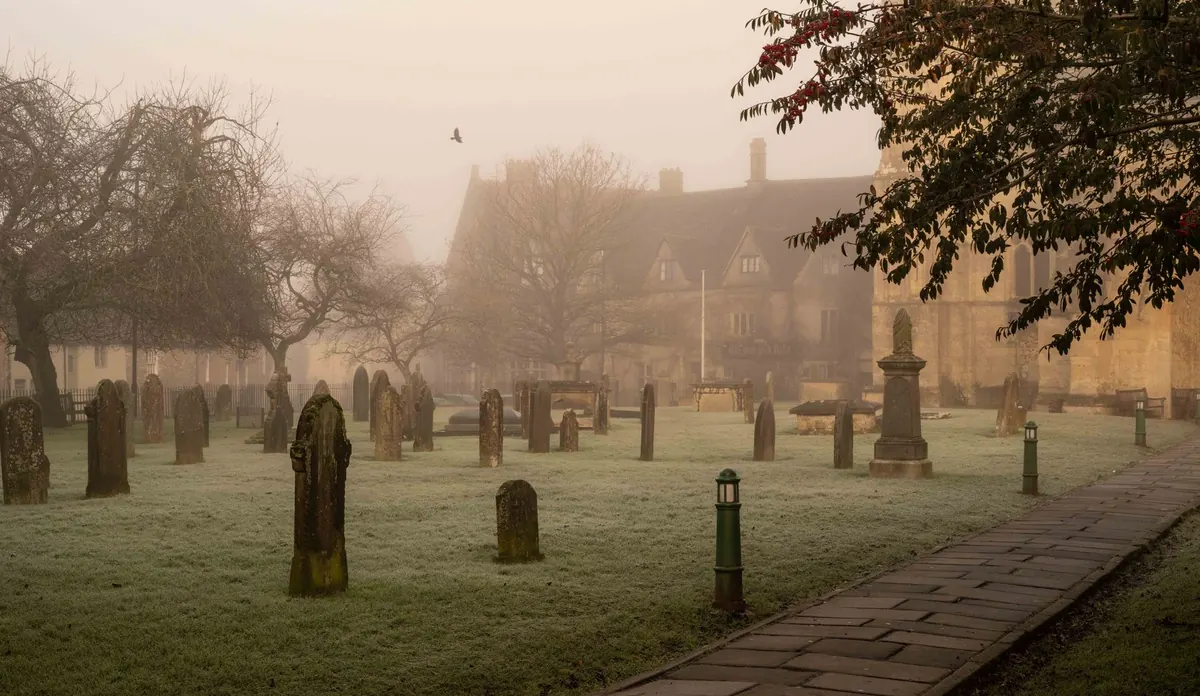
Britain is a small set of islands with a crowded afterlife. Nearly every village has a lane where a lady in grey walks, a bridge a black dog is said to guard, or a pub landlord who has quietly given up moving the chairs back. What is interesting is not that we tell ghost stories, but how neatly the accounts have settled into types. After a few centuries of retelling, sightings sort themselves by behaviour: what the ghost does, who it appears to, and what it seems to want. Learn those categories and any haunting report becomes much easier to read.
Most British accounts are sorted by one question: does the ghost notice you?
Also called place memories, recordings or loop hauntings. The ghost does the same thing regardless of who is watching. A figure crosses a landing at the same hour. Footsteps climb a staircase that nobody is on. A room smells of tobacco when nobody in the house smokes. Witnesses decades apart describe the same sequence, in the same order, and the apparition never responds to being shouted at.
The popular explanation is the "stone tape" idea — that a place plays back an event like a recording. Treat that as a useful metaphor rather than a proven mechanism. Nobody has demonstrated it. What matters for reading a report is the tell: repetition rather than conversation.
Here the ghost behaves as though aware. It answers knocks, moves objects, follows people between rooms, or reacts when addressed. These are rarer in the written record and far more likely to attract a full investigation. The clue in an account is reciprocity — something happening in response to something else.
The word is German for "noisy spirit", and noise is where most British cases begin: raps, knocks, objects thrown, bedclothes pulled off in the night.
Three well-known examples span three centuries. The Drummer of Tedworth, recorded in Wiltshire in the 1660s, centred on mysterious drumming and knocking. At Epworth Rectory in Lincolnshire in 1716–17, the Wesley household was troubled by raps and a moving prayer book; the family nicknamed the presence "Old Jeffrey". In the late 1970s, the Enfield case in north London produced two years of reported activity in an ordinary council house. Borley Rectory in Essex, publicised as "the most haunted house in England", belongs to the same tradition.
Poltergeist cases share a shape. They start quietly, escalate over weeks or months, gather around one person — often, though not always, a child or teenager — and stop as abruptly as they began. If you are reading an account, look at the household detail: who was under strain, who was ill, who had just moved. That is not debunking. It is simply where the interesting questions live.
Quieter, and much more commonly reported: the person who sees a relative appear at the moment that relative dies, or who hears a knock at the door with nobody there. These "crisis apparitions" were the bread and butter of early psychical research from the 1880s onwards, and they remain the sort of experience ordinary people are most likely to mention and least likely to dramatise.
Folk tradition folds similar warnings into families. A particular figure, bird or bell becomes a death omen, and in some English and Scottish families the phantom double of a living person — a fetch — is said to appear shortly before a death. Welsh tradition has the corpse candle, a light seen travelling a known route towards the churchyard, sometimes before a funeral. None of this predicts anything reliably. It is a vocabulary for the feeling that something has been announced rather than merely seen.
Black dogs are Britain's most regional ghost. Almost every county has one, and each has its own name and temper:
Note how few of them attack. The tradition is mostly about warning, guarding or escorting. And there is a mundane reading worth keeping: a large black dog at dusk looks enormous, and anyone walking an unlit road had every reason to be frightened of real dogs too.
Ghost lore takes its colour from landscape and trade. Cornish mining country gave us the knockers, spirits heard tapping in the shafts, and their presence was treated as a working matter rather than a horror. Fenland and marsh country gave us the wandering lights that led travellers off the path. Castle and manor country gave us the white lady and her quieter cousin the grey lady, almost always attached to a lost love or a wrongful death. In Scotland and the Borders, phantom drummers and pipers turn up in accounts as sounds rather than sights — the noise arriving before anyone claims to have seen anything.
That pattern is a good test of any story you hear. If the details fit the local ground — the route of a lane, the sound of a mine, the shape of a churchyard — the account is probably old and local. If the details could be moved to any house in the country without changing them, you are likely hearing something newer.
Whether you are reading a Victorian collection or a post on a local forum, a few habits make you a better reader:
One practical note: if a place is costing you sleep, or leaving you anxious, frightened or on edge, treat that as a health matter rather than a haunting one and speak to your GP. Folklore is fascinating, but it is no treatment for distress.
Photo: Richard Harris / Pexels

May Day and Beltane mark the start of summer with dew, greenery, maypoles and fires. Here’s how to join in safely,...

A tour of the legends attached to Britain's standing stones — dancing maidens, wandering rocks and the Devil's poor...
Copyright © 2026 Wisp Patch. All Right Reserved.